
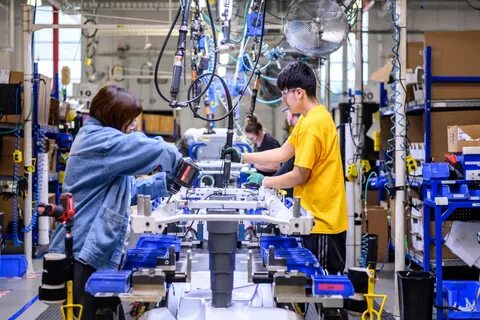
For many people, Europe feels like a distant dream.
But behind the beautiful cities and famous landmarks, something serious is happening.
Europe’s factories are running out of workers.
Not tomorrow. Not next year. Right now.
Across Germany, Poland, the Czech Republic, Hungary, Italy, Spain, and Slovakia, manufacturers are struggling to keep production lines moving. Machines are ready. Orders are waiting. But workers are missing.
And that shortage has opened a door.
A door for foreign workers who are willing to work hard, follow the rules, and start from the factory floor.
Yes, factory jobs with visa sponsorship in Europe are real.
But so are the scams, the bad contracts, and the false promises.
This guide is written to give you the full picture. Not the fantasy. Not the fear. The truth.
You will learn:
- Which European countries hire foreign factory workers
- What types of factory jobs are available
- How visa sponsorship really works in Europe
- Where to find real and legal job offers
- What the pay, conditions, and lifestyle look like
- And how to avoid being cheated or exploited
Let us start from the foundation.

Why Europe Is Hiring Foreign Factory Workers Now
Europe is aging fast.
Millions of people are retiring every year. Fewer young people are entering industrial work. At the same time, Europe is under pressure to produce more food, more cars, more electronics, and more packaged goods.
This affects:
- Food processing plants
- Car factories and auto parts plants
- Packaging and logistics centers
- Electronics and appliance assembly lines
- Furniture and textile factories
Many Europeans no longer want these jobs. The work is often:
- Physically demanding
- Repetitive
- Shift-based
- Noisy or cold, especially in food factories
So employers are looking outside Europe.
That is why the European Union runs EURES, the official European Job Mobility Portal, where verified employers across Europe post real jobs, including factory and warehouse work.
And that is also why the EU Immigration Portal, which explains legal work permits and residence rules, exists to guide both workers and employers.
This is not a trend. It is a long-term labor shortage.
What “Visa Sponsorship” Really Means in Europe (Read This Carefully)
This is where many people get confused.
Europe does not work like the USA.
In most European countries:
- Employers do not buy visas for workers
- Employers do not control the embassy
- Employers do not “import” workers directly
Instead:
- The employer gives you a job contract or job offer
- You use that contract to apply for a work visa or permit
- The employer provides supporting documents
- Sometimes they help with housing or registration
So when people say:
“This factory sponsors visas”
What it really means is:
“This factory is willing to hire foreigners and support their legal work permit process.”
This is normal in Europe. And it is actually good news.
It means many factories can hire you, not just a few famous ones.
Which European Countries Offer the Most Factory Jobs to Foreigners?
Not all countries are equally open.
Some have higher demand. Some have easier processes.
Countries with the Strongest Demand
- Germany – automotive, food processing, logistics, machinery
- Poland – packaging, warehouses, meat processing
- Czech Republic – electronics, auto parts, assembly plants
- Hungary – automotive suppliers, general manufacturing
- Slovakia – car manufacturing and parts
- Italy – food, textiles, furniture
- Spain – food processing and packaging
Germany pays more and offers long-term opportunities.
Eastern Europe is often easier to enter but pays less.
Types of Factory Jobs You Can Apply For
Most factory jobs do not require a university degree.
Common roles include:
- Production line worker
- Packaging and sorting staff
- Assembly worker
- Machine operator assistant
- Warehouse worker
- Quality control helper
- Food or meat processing worker
Some jobs require:
- Basic experience
- Short training
- Sometimes basic language skills
Many jobs train you after you arrive.
Comparison Table: Factory Work in Popular European Countries
| Country | Typical Monthly Pay | Language Requirement | Demand Level | Entry Difficulty |
|---|---|---|---|---|
| Germany | €1,800 – €2,500 | Basic German often needed | Very high | Medium |
| Poland | €900 – €1,400 | Often not required | High | Easier |
| Czech Republic | €1,100 – €1,600 | Sometimes required | High | Easier |
| Hungary | €900 – €1,300 | Often not required | High | Easier |
| Italy | €1,200 – €1,800 | Basic Italian helps | Medium | Medium |
| Spain | €1,100 – €1,700 | Basic Spanish helps | Medium | Medium |
These are general ranges. Overtime and night shifts can increase income.
Where to Find Real Factory Jobs (And Avoid Scams)
This part can save you from disaster.
You should always start with official and trusted sources.
Two of the best are:
- EURES, where European employers post verified jobs
- The EU Immigration Portal, which explains legal work permits and rules by country
You can also:
- Apply directly on company websites
- Use well-known European job boards
- Use only licensed recruitment agencies
Avoid:
- WhatsApp or Telegram “agents”
- Anyone asking for money for a job offer
- “Guaranteed visa” promises
- Contracts you cannot verify online
Golden rule:
Real employers do not sell jobs.
How the Process Usually Works (Step by Step)
- You find a job
- You apply online
- You attend an interview (often online)
- You receive a job offer or contract
- You apply for a work visa or permit
- You travel after approval
Simple in theory. Slower in real life.
What Documents You Will Usually Need
Most countries ask for:
- Passport
- CV
- Job contract
- Police clearance (sometimes)
- Medical certificate (sometimes)
- Proof of accommodation (in some countries)
Each country is different. Always check official rules.
The Real Advantages of Factory Jobs in Europe
Let us be honest about the benefits.
- You get legal entry into Europe
- You get stable monthly income
- You get European work experience
- You may qualify for permit renewal or long-term residence
- You can send money home
- Some employers provide housing or transport
For many people, this is a life reset.
The Hard Truths Nobody Likes to Talk About
This is not luxury work.
You should expect:
- Long hours on your feet
- Repetitive tasks
- Strict rules and schedules
- Cold or noisy environments in some factories
- Shared housing in many cases
You may also face:
- Language barriers
- Cultural shock
- Homesickness
This is honest work. But it is not easy work.
Can Factory Work Lead to Permanent Residence?
In many countries, yes.
If you:
- Work legally
- Renew your permits
- Learn the language
- Follow the rules
You may qualify for:
- Long-term residence
- Or even permanent residence
Germany, for example, has clear pathways from work permits to settlement.
Do You Need to Speak the Local Language?
It depends on the country and the factory.
- In Germany and Italy, language helps a lot
- In Poland, Czech Republic, and Hungary, many factories use supervisors who speak English or provide translators
But:
Learning the language always improves your pay, comfort, and respect.
How Much Money Should You Bring?
Even if your employer helps, bring:
- At least €1,000 to €2,000 for safety
- For food, transport, and emergencies
- Until your first salary arrives
The Emotional Side of This Journey
Moving to Europe for factory work is not just a job change.
It is:
- A mental test
- A cultural shock
- A test of patience and discipline
Some people quit early.
Some people become stronger than they ever imagined.
How to Avoid Being Exploited
- Always read your contract
- Never give your passport to anyone
- Keep copies of all documents
- Know your rights
- Use only official channels
If something feels wrong, it probably is.
Is Factory Work in Europe Worth It?
The honest answer:
It depends on your goal.
If you want comfort and easy money, this is not it.
If you want a legal entry into Europe and a long-term opportunity, it can change your life.
Final Thoughts: A Door, Not a Destination
Factory jobs in Europe are not the final dream.
They are a door.
A door to:
- Stability
- Legal residence
- European experience
- And better opportunities in the future
If you walk through that door with clear eyes and strong discipline, it can change your story.
Frequently Asked Questions (FAQs)
1. Do European factories really sponsor visas?
They give you a job contract. You apply for the visa yourself.
2. Can I apply without experience?
Yes. Many factory jobs are entry-level.
3. Do I need to speak the local language?
Not always, but it helps a lot.
4. Are these jobs permanent?
Many start as temporary but can be renewed.
5. How do I avoid scams?
Use official portals like EURES and follow the rules on the EU Immigration Portal.